Monday, May 30, 2011

Qatar: An architect's playground

As architecture students, Qatar couldn't be a better classroom. On one side of the street you see American fast food chains and the other a Jean Nouvel tower. It's a great lesson in what to do and what not to do, I suppose. We got a fantastic tour of the city today before leaving for Kathmandu where I now type from. Our tour guide was quite proud to show us the palatial residential and commercial developments that they hope will drive in the masses. We also learned that they provide newly married couples with an interest free loan and $250,000 to start their family, so maybe we just might end up here with those masses.


 IM Pei's Museum of Islamic Art. Gorgeous collection and exhibitions. Animated tour guide included.


Sunday, May 29, 2011

First stop: Qatar

And we're here! After a 12 hour flight we've arrived to sweltering heat here in Qatar. We weren't expecting to arrive to such familiar places:
 We enjoyed a beautiful dinner at the market, Souq Qaqif.


And now we're off to explore some other beauties today before our flight to Kathmandu later. See you soon!

Saturday, May 28, 2011

And we're off!

Sayonara folks! We're off to find some Spirit of Place adventures. First stop, Doha. See you tomorrow! And don't forget to check out our Facebook group site or add as a friend here. I'll be adding photos/videos as we go along so make sure to check in!
Take a look at these Nepalese students from the village. Darling!

Friday, May 27, 2011

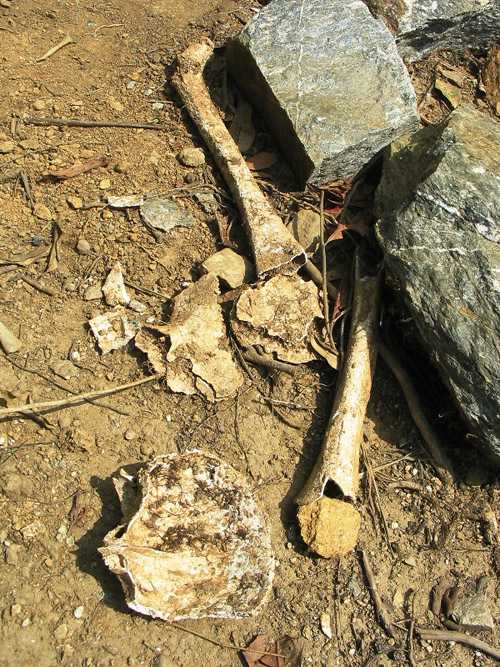
Human remains

Sometimes you just never know what your shovel will dig up. Human bones were found on the site of the memorial as the local craftsmen continue work on the base of the memorial, no doubt a reminder of the great work they are doing. 1 more day until the students take off to Qatar then off to Nepal! 

Wednesday, May 25, 2011

Student bio: Kristyn McKenzie

Kristyn with her poetic models
Hi my name is Kristyn McKenzie. I am a graduate student studying architecture at Catholic University. Participating in the Spirit of Place class is an experience I have been waiting for throughout my academic architecture career. Finally being able to do so is truly an opportunity of a lifetime especially since it is taking place in Nepal. I feel that seeing the project from the metaphor inspiration stage all the way through to the final reveal and celebration will make me even more proud to be in the field of architecture. I am most looking forward to working with the people from the village and being immersed into their culture. I am very excited to have this opportunity to meet new friends.

Tuesday, May 24, 2011

6 more days!

Guess what?

Thanks Evan!

Tuesday, May 17, 2011

pouring the foundation


13 more days until we're there!

Monday, May 16, 2011

Student bio: Allie Steimel

Allie with her poetic model
Time to spotlight our students! First up, meet Allie Steimel. 


"I am approaching the end of my first year of graduate school for architecture at Catholic University. I've always been interested in the spiritual and cultural aspect of architecture as well as the human experience, so that's what drove me to choose Cultural Studies/Sacred Space as my concentration. I'm very excited to be traveling to Nepal this summer for the Spirit of Place project! Through the project, I hope to gain a better knowledge of construction, as well as a better understanding of the Nepali culture."

Student bio: Miguel Castro

Miguel with his poetic model
A bit of good fortune landed Miguel in the right place at the right time to participate in this year's Spirit of Place--Nepal.


I became involved with Spirit of Place randomly. I had to choose an architectural elective to take to finish off my final semester here at CUA as a graduating senior, and this was one that seemed the most interesting, I wasn't aware that it was going to be a mini studio I would be taking on the side, but once I learned that the project we would take part in designing will actually be built and in Nepal, I could not help but be more interested in the course. 

I was never aware at a young age that I had a deep connection with architecture. I remember being interested in architectural drawings (primarily section and plan drawings) and actually understanding space through these drawings alone. In high school I took a drafting class that eventually made me want to pursue it once I graduated.

I am taking a year off of studies for now. I plan to travel to Peru for a few months and explore the places I haven't seen or visited. If that doesn't go through, I will be looking for a job. Then, I plan to go to grad school after this year.

How many times in my life will I be able to go to Nepal? How often am I going to be able to say that I took part in a design and construction of a building in another part of the world? Nepal is going to quite an experience not only architecturally but culturally.

I have no clue about construction. I do know how to get rid of that blinking 12:00 light on old school vcr's and cable boxes...if that helps in anyway. 

Thursday, May 12, 2011

Digging

The team prepares the site by digging out the foundation before pouring the concrete in for the ancestor memorial on Namje Hill before we arrive. And somehow, they look like they are having a great time!


Tuesday, May 10, 2011

the locals

We're lucky enough to work with local artisans and builders on the site in a few weeks. Right now they are busy preparing the foundation for when we arrive. We can't wait to meet them and get cracking!


Monday, May 9, 2011

soiling and puja

We have less than 30 days before we start construction and we have some great progress taking place. Our Nepal counterparts have finished preparing the stepped footing, lined with gravel made by hand by village women. Next up, setting the rebar and pouring the concrete. They are currently gathering all the concrete materials from all the surrounding villages. On top of that, the village shamans performed a puja for the work and health of all those involved. We're well on our way! 


Thursday, April 21, 2011

Support Spirit of Place

The primary goals of Spirit of Place / Spirit of Design is to promote cultural preservation and environmental stewardship through architectural and artistic design. The success and demand for this program invites expansion. The broader agenda for the future of Spirit of Place / Spirit of Design reflects the growing needs for the changing realities of our environmental and cultural concerns. The SPSD educational program intends to accomodate the growing number of students who express interest in the program, including participation from national and international universities, as well as primary education schools.

In conjunction with continued student education, the specific tasks of SPSD are to:


  • increase the number of annual expeditions and the cultural diversity of venues
  • increase the number of student participants and decrease the program expense for students
  • promulgate the SPSD syllabus for national, international, and high school institutions
  • increase public education through web sites, publications, television, lectures, and symposiums
  • publish a design critique for SPSD
As a non profit 501C-3 organization, your tax exempt contributions are gratefully welcome. Click here to contribute click on the "donate" button on the left.

Wednesday, April 13, 2011

Our first newspaper coverage

Long over-due update! The participants are busy designing their ode to Nepal but in the mean time, feast upon the faint image of Travis Price in full attire as he is welcomed in the  village at a ceremony in Namje. But of course, you could tell that from the headline right? 


Tuesday, January 18, 2011

in Namje

Travis Price on his recent trip to Nepal checking out the site: "Walking the middle mountains of Nepal in Namje. Cold, stunning, and in shaman time."

Wednesday, January 12, 2011

Travis update from Nepal

"The photo above of us at the site are local villagers, builders, and plantsmen.  Also is Kathleen Lane, Rajeev Goyal, Priyanka Bistra, and Stephanie Odegard of Odegard Carpets.  I'm somewhere,  in my mind at least!  A formidable team!“


Travis just returned from his latest adventures to Nepal and Doha:


"Happy New Year!!!! We have been at 6000 ft in a Magar Village, no heat, cold, but heavily layered.  Stunning views of the Himalaya and amazing shaman ceremonies as well as helping villagers with development designs for homes and farms. The entire village greeted us with a host of 5 Shamans singing and sacrificing chickens in dancing ceremonies........ amazing."


Travis also dished that the theme for this year's Spirit of Place in Nepal will be Magar Culture of Nepal "Memorial to the Ancestors." At this point, I'm just as clueless as you, but I absolutely cannot wait to find out what all this means! 


STAY TUNED!

Friday, January 7, 2011

The site of Spirit of Place 2011 mentioned in The New Yorker


Peter Hessler talks about Rajeev Goyal, a young activist and former Peace Corps volunteer, and his successful water-pump project in eastern Nepal. Hessler's portrayal compares the streets of Washington, DC to that of Namje village, the site of Spirit of Place 2011. It provides a perspective on the history of his involvement to the area and will be of utmost importance to us as he introduces us to the area. Read more here and the full article here. You can also listen to an audio clip of Hessler here.

Tuesday, December 7, 2010

Travis Price in Home & Design

Founder of Spirit of Place - Spirit of Design, Travis Price, is featured on the cover of the architecture issue of Home & Design. If you're in the DC area, go get yourself a copy or read about it here. The beautiful home for Steve Salop and Judy Gelman overlooking the Potomac River pays homage to the natural elements of the site including the rising earth and clouds. It is divided into two parts, which the owners have nicknamed Terminal A and B because of the similarity of Dulles Airport by Saarinen.
The interiors are softened with warm woods by Thos. Moser and lots of built-in storage to keep the place clutter-free care of interior designer Barbara Hawthorne. Price says, "The home isn't sterile like the Bauhaus, but is full of natural rhythms. This is modern architecture with soul." That pretty much sums up Price's work. 


Photos by Kenneth Wyner.

Friday, December 3, 2010

Announcing...Nepal!

Spirit of Place - Spirit of Design 2011 has been selected: NEPAL. We are joining forces with an established consortium of ongoing humanitarian and education programs in the Namje and Thumki villages of eastern Nepal. These remote villages comprise a rural and disenfranchised Magar community with a traditional agrarian economy, craft and building heritage, and cultural identity that is under threat due to rapid globalization. Take a look:


 Since 2001, international Peace Corps volunteers have worked closely with village residents, and several international grassroots organizations and NGOs including Greening Villages Movement, Greening Schools Movement, Living Earth Institute, and the Phul Maya Foundation.  Projects have included new school construction, clean water infrastructure, and sustainable agriculture education.


Beginning in January 2011, undergraduate and graduate architecture students from The Catholic University of America in Washington, DC will explore the culture, history, and ecology of a village site and develop the design for the ‘legacy marker’ which will be built with local Nepali builders and village residents in summer 2011. In addition, the students will explore and envision models for schools, libraries, guest houses, and other rural community spaces through a full-semester studio, which, can be built in future phases within this community and/or other parts of Nepal. 


Nepal is undergoing an extremely rapid and haphazard phase of modernization as a result of globalization.  Hundreds of villages are losing their cultural identity in the transformation into concrete communities, as there are few demonstrations of alternative visions and ideas for architecture and community space.  Not only will Spirit of Place build this spiritual marker (which will reflect the Magar cultural heritage of Nepal), but students will also design models and renderings for schools, libraries, community spaces and other structures which could have an echoing effect across the region, helping to protect and promote the cultural heritage and environmental spaces.  It is a highly unique educational opportunity that will create a new force to preserve the spirit of Namje and Thumki for the future.


Spirit of Place/Spirit of Design will bring students from schools of architecture and design, all from different countries of the world, to design the project during the spring 2011 semester at The Catholic University of America in Washington, DC. Following a January site visit to the villages for planning and consultation with community residents, Spirit of Place program instructors will lead the students into an immersion of Nepali and Magar history, culture, in order to design an evocative space to reflect and celebrate the spirit of the unique site. 


During the design process, students will develop metaphoric designs based upon Nepali culture and mythology, expressed in a modern idiom in a variety of media.  The students then create their own poetic and sculptural interpretations, and then further refine these into detailed architectural models:  both physical and in electronic media, as well as in working construction drawings.  Opportunities for public exhibits of the student design work will be sought in Washington and in Nepal.


In summer 2011, the students will be joined by local artisans to construct the Spirit of Place installation in Nepal in 9 days. 


The impact of this education on the students is invaluable and life-changing.  Their study of the history of Nepali architecture and the importance of religious and cultural metaphor in creating the historical architecture will enable them to be a part of creating a new international architectural language.  Additionally, the students will focus on exploring appropriate technology, local architectural techniques, and conservation practices for construction.  A significant goal is to learn about designing architecture that is environmentally benign in a modern world without losing cultural history and authenticity.  Subsequently, a record of vanishing Nepali architectural design and building techniques will be preserved hand in hand with the emerging design idioms.


New Models for Culturally Responsive Design:  Benefit to the Villages of Namje and Thumki


Currently, global architecture, especially in Nepal, has become a sprawling and misguided landscape of construction in search of a soul.  Modern development is severely lacking not only in ecological responsibility and historical literacy, but more importantly in Nepal, the reinforcement of its sacred cultural metaphors.  Globally, we are witnessing a rapid exhaustion of ecological and cultural resources.  Even more disconcerting, new construction is taking its toll on the human spirit, the rich ancestry of indigenous peoples, and their sacred geographies.  There is a compelling need in our emerging global culture to develop and record a new aesthetic archetype that speaks to these issues.  The Spirit of Place building expeditions have continually sought remedies to this cultural and environmental problem for over fifteen years. 


This year, the benefit to the Nepalese villages of Namje and Thumki of our expedition is manifold.  Building an improved design alternative based upon their historical architecture is crucial to avoiding the pitfalls of soulless modern construction currently rampant in Nepal.  The project at its core is developing an innovative modern architectural language for Nepal based on its sacred past.  In addition, local Nepalese will be working side by side with an emerging generation of American architects.  Both groups will be learning from each other during the experience.  More importantly, this expedition ensures that a built project will be left behind as a clear icon. As a design critique with its built manifestation, the project will be a clear milestone of change for others to emulate and from which to measure the built  progress of the future.


STAY TUNED!